ADVANCED TESTING

Immunofluorescent Laboratory

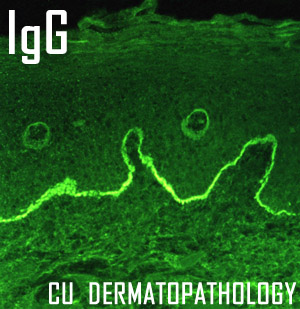
The Immunofluorescent Laboratory is the largest diagnostic laboratory in the Rocky Mountain region, dedicated to the diagnosis of bullous and autoimmune diseases. Services that are routinely offered include direct immunofluorescence, indirect immunofluorescence, saline-split skin direct and indirect immunofluorescence and immunomapping of genetic bullous diseases (epidermolysis bullosa). The antibodies that are most commonly used include IgG, IgA, IgM, C3, fibrin, Clq (connective tissue disorders) and IgE (select cases).

Transport media for immunofluorescent studies can be ordered from the Client Services tab. Submission forms for immunofluorescent studies can also be downloaded from this tab.

Immunofluorescence Lab Info Sheet: Click Here to Download the IF Lab Info Sheet

Immunofluorescence Requisition Form: Click Here to Download the IF Requisition Form


Electron Microscopy

Electron microscopy is offered on a routine basis for skin diseases. The most common use of this technique is for the diagnosis of the level of split in epidermolysis bullosa.

Transport media for electron microscopy studies can be ordered from the Client Services tab. Submission forms for electron microscopy studies can also be downloaded from this tab. The turn around for electron microscopy is typically 10-14 days.


Advanced Materials Analysis

We have the technology and expertise to analyze tissue for a variety of metals and biological compounds using advanced bioanalytical techniques, such as: SEM-EDS, high-performance liquid chromatography, inductively coupled plasma mass spectrometry, inductively coupled plasma optical emissions spectrometry, Raman spectroscopy and nuclear magnetic resonance spectroscopy. Because of the time and expense of such testing, this interest is limited to research collaborations or prior arrangement.

When interest exists for such services or collaborations, please contact Dr. Whitney A. High before sending any specimens. Turn around time on such specimens is usually around 6-8 weeks, but it varies based upon batching of specimens destined for similar testing.